01 / The brief
Ordering gas meant a phone call and a guess.
In Brahmanbaria, refilling an LPG cylinder usually means ringing the dealer you already know and hoping your brand is in stock. There is no way to compare prices between dealers, and no way to know when the delivery will turn up.
Dealers had the mirror image of that problem. Orders arrived by phone and lived on paper, and nobody could see stock or earnings at a glance.
“Gas lagbe?” is Bangla for “need gas?” The brief was one product that answers that question for both sides, on the phones people already carry.
02 / The platform
One order, seen from every side.
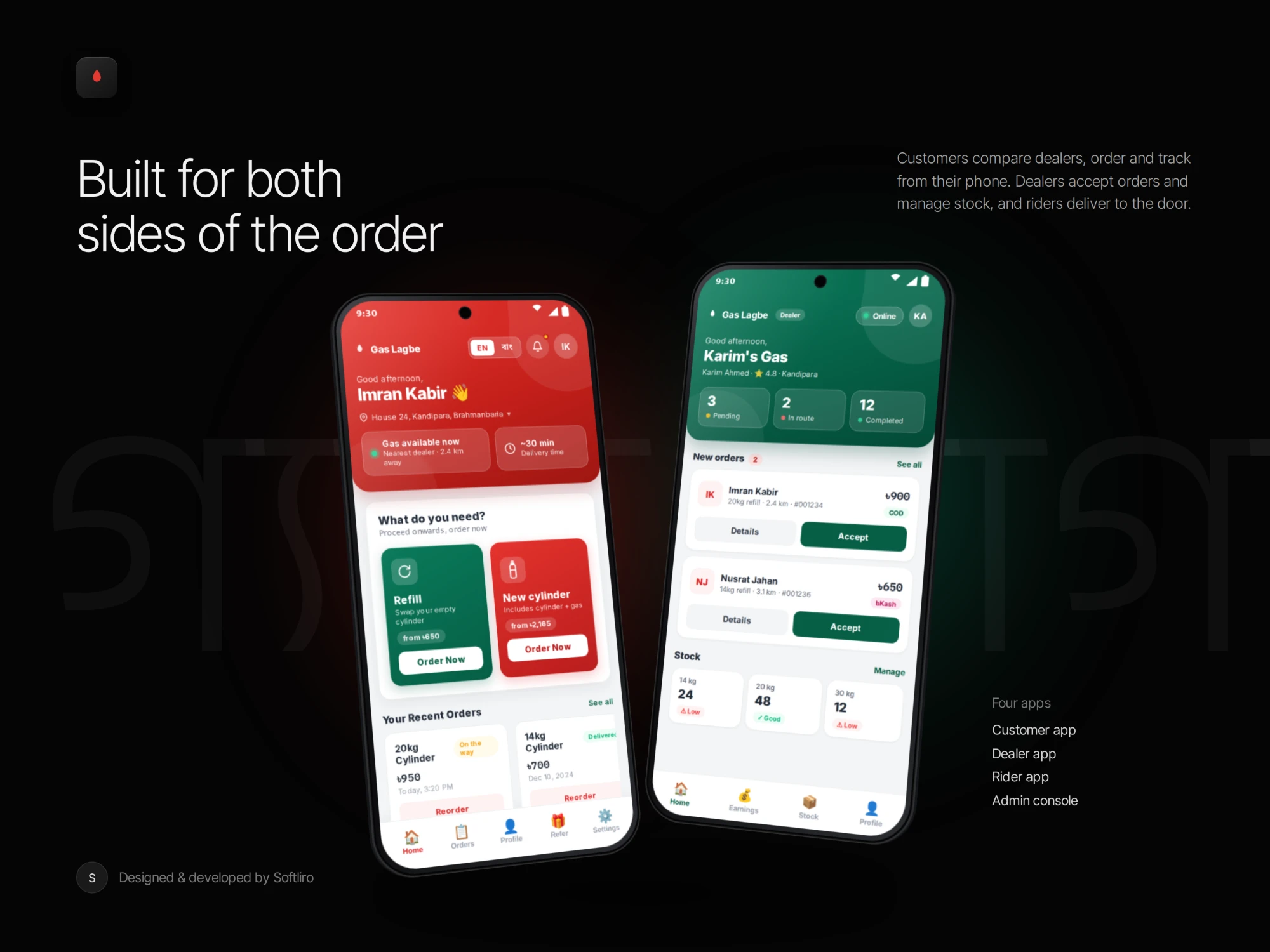
An order passes through several hands before it reaches the door, so the platform is three native apps for Android and iOS, one each for customers, dealers and riders, with a web version and admin panels alongside. All of it sits on one design system, rather than a single app trying to serve everyone.
Customers
Customer app
Refill or new cylinder, a size, a dealer’s offer, then cash on delivery, bKash or Nagad.
Dealers
Dealer app
Accept orders, and keep brands, prices, stock and earnings up to date from the same app.
Riders
Rider app
Take the order to the door and confirm the handover when the cylinder is delivered.
Owners & admins
Admin panels
Orders, dealers, riders, payouts and pricing in one place, so the company’s owners and admins can run the marketplace.
03 / Design decisions
Built around the question in the name.
Refill or new cylinder, first.
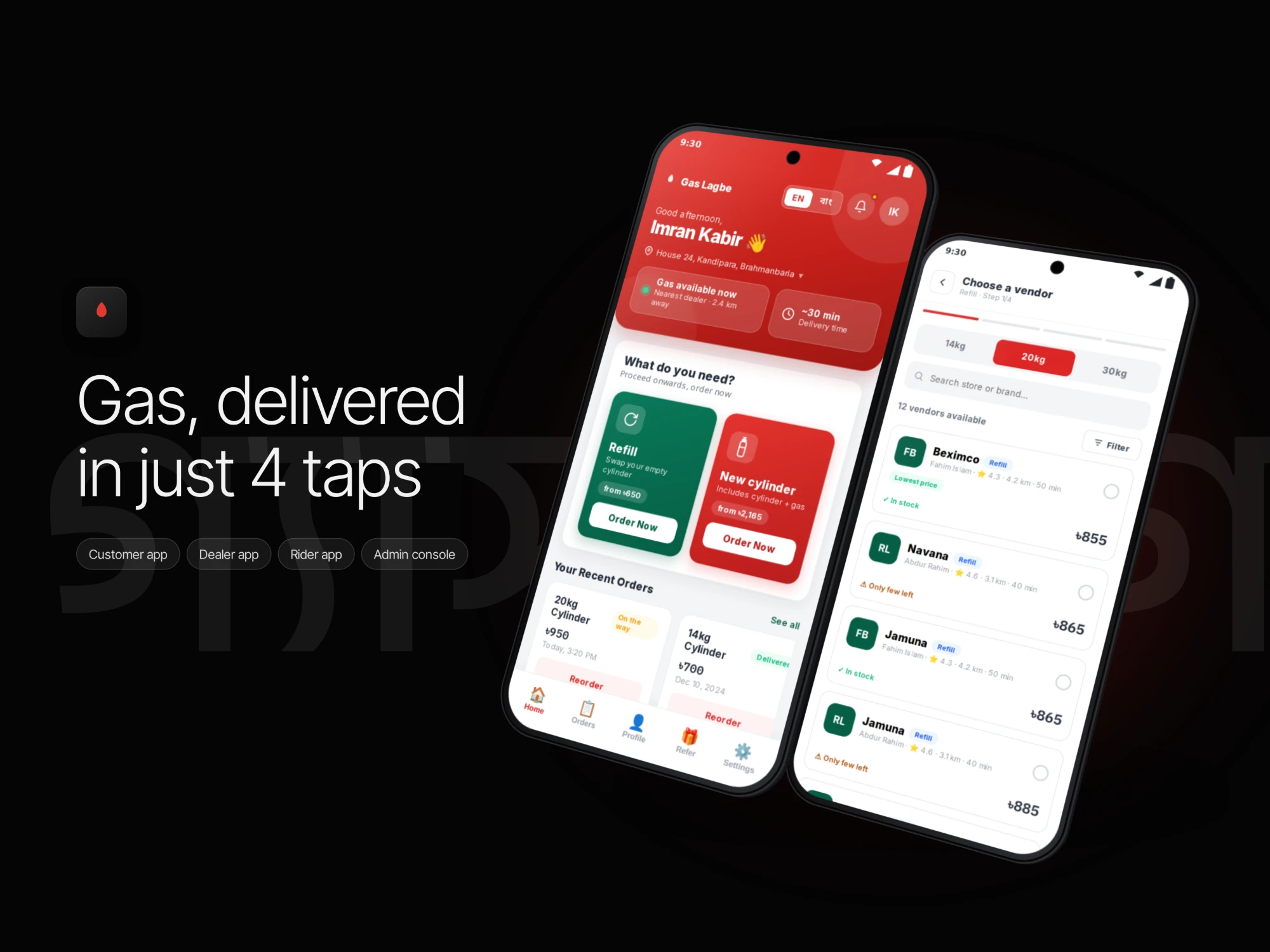
Customers already know which one they need: swap an empty cylinder, or buy their first. So the home screen asks exactly that before anything else, with a starting price on each option. Above it sit the delivery address, whether gas is available nearby, and the usual delivery time.
Every dealer’s price on one list.
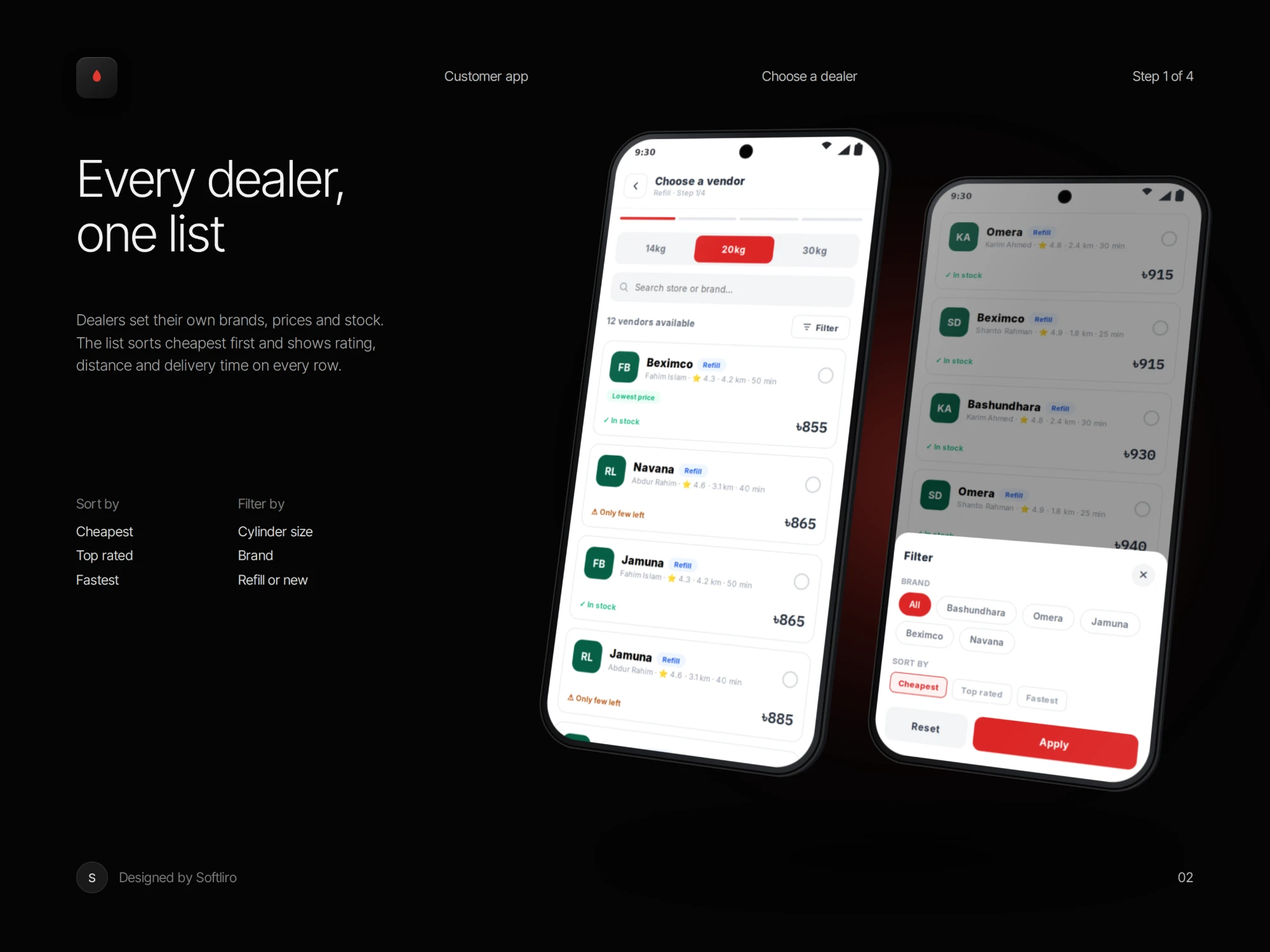
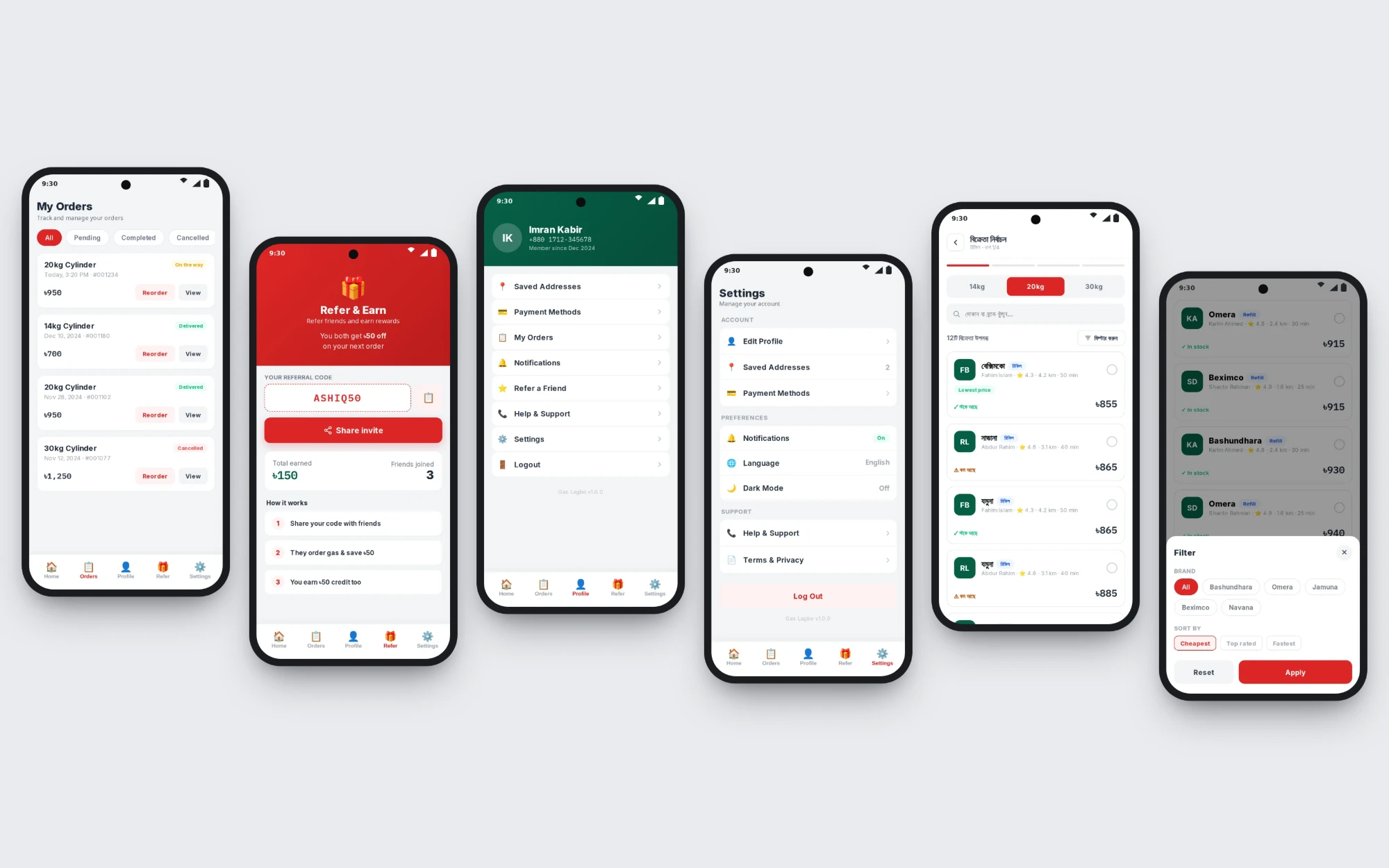
Each dealer sets their own brands, prices and stock. The list sorts cheapest first, and every row carries rating, distance, delivery time and stock, so the trade-off is visible before anyone taps in. A filter sheet narrows it by brand and re-sorts by top rated or fastest.
After ordering, a name and a call button.
Tracking shows three plain stages, confirmed, assigned and on the way, with the arrival time and the dealer by name. The call button is there on purpose: at a gate with no house number, a short call is often the fastest way to sort out directions.
04 / The order flow
One question per screen.
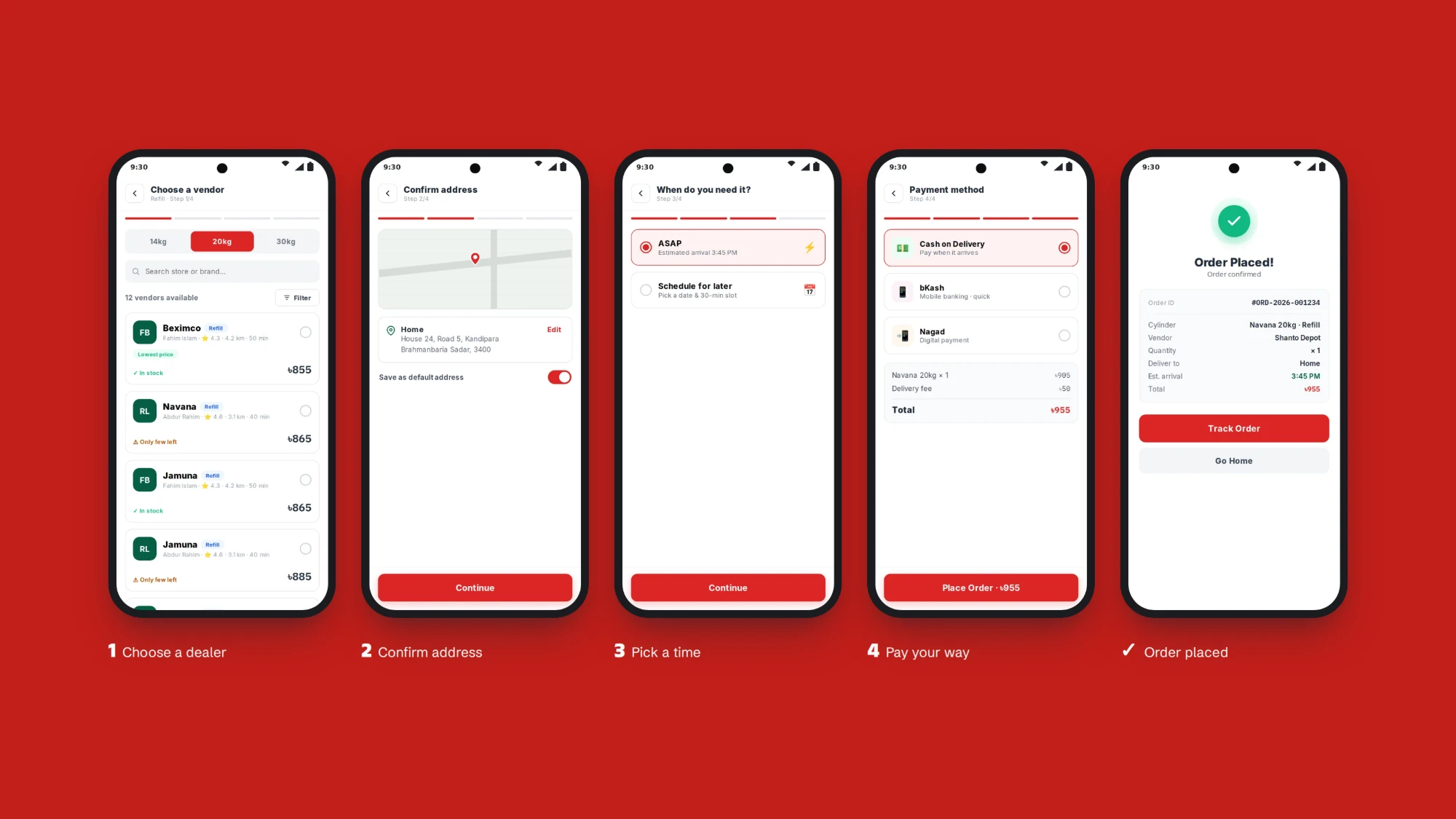
Dealer, address, time, payment. Four screens, each asking one thing, with a progress bar across the top and a button that always names the next action. The last one carries the total: Place Order · ৳955.
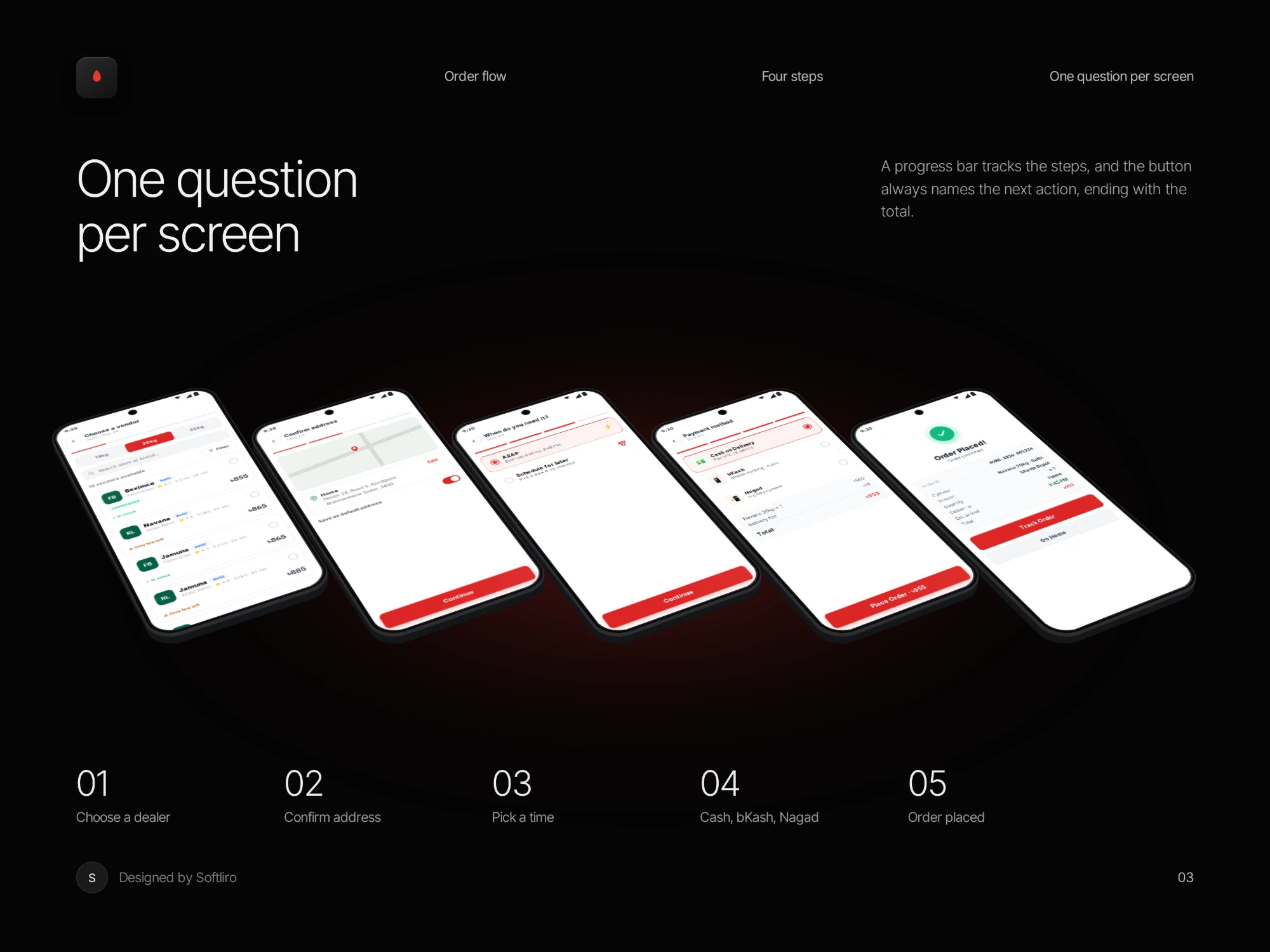
Delivery can be as soon as possible or booked into a 30-minute slot, and payment takes cash on delivery, bKash or Nagad.
05 / Beyond the order
Reorders, referrals and Bangla.
Order history puts a Reorder button on every past cylinder, because most orders repeat the last one. A referral code takes money off the next order for both people, and the whole app switches between English and Bangla from the header.
06 / The outcome
From marketplace model to a working product.
- Product strategy. A delivery marketplace connecting customers, dealers and riders, run by the company behind it.
- UX flows. Ordering, delivery and handover, payouts and pricing.
- UI design. Customer, dealer and rider apps, the web version and the admin panels on one design system, in English and Bangla.
- Development. Three React Native apps for Android and iOS, for customers, dealers and riders. The web version and the admin panels are built with Next.js, on a Node.js backend with a PostgreSQL database.