01 / The brief
Whatever you need, found fast.
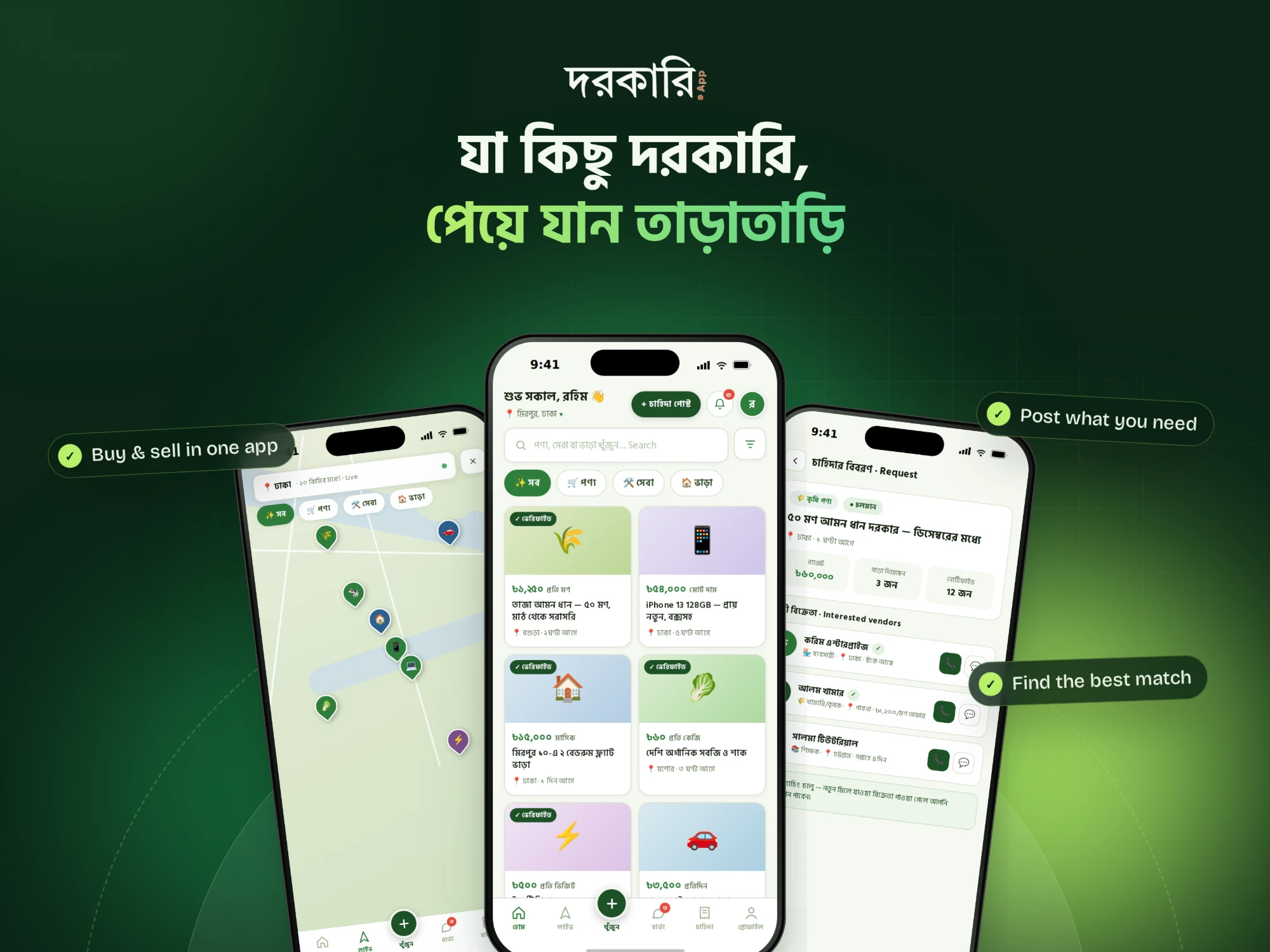
Dorkari is a live marketplace for Bangladesh. The name is Bangla for “needed”, and the app’s own line is the whole brief: যা কিছু দরকারি, পেয়ে যান তাড়াতাড়ি, whatever you need, get it fast.
It brings three kinds of trade into one app: products, from a harvest of Aman rice to a second-hand phone; services, such as an electrician or a home tutor; and rentals, from a family flat to a car or an ambulance.
Most marketplaces leave all the searching to the buyer. Dorkari also works the other way round: a buyer posts what they need with a budget, and the vendors who can supply it come to them.
02 / The platform
One app, two sides.
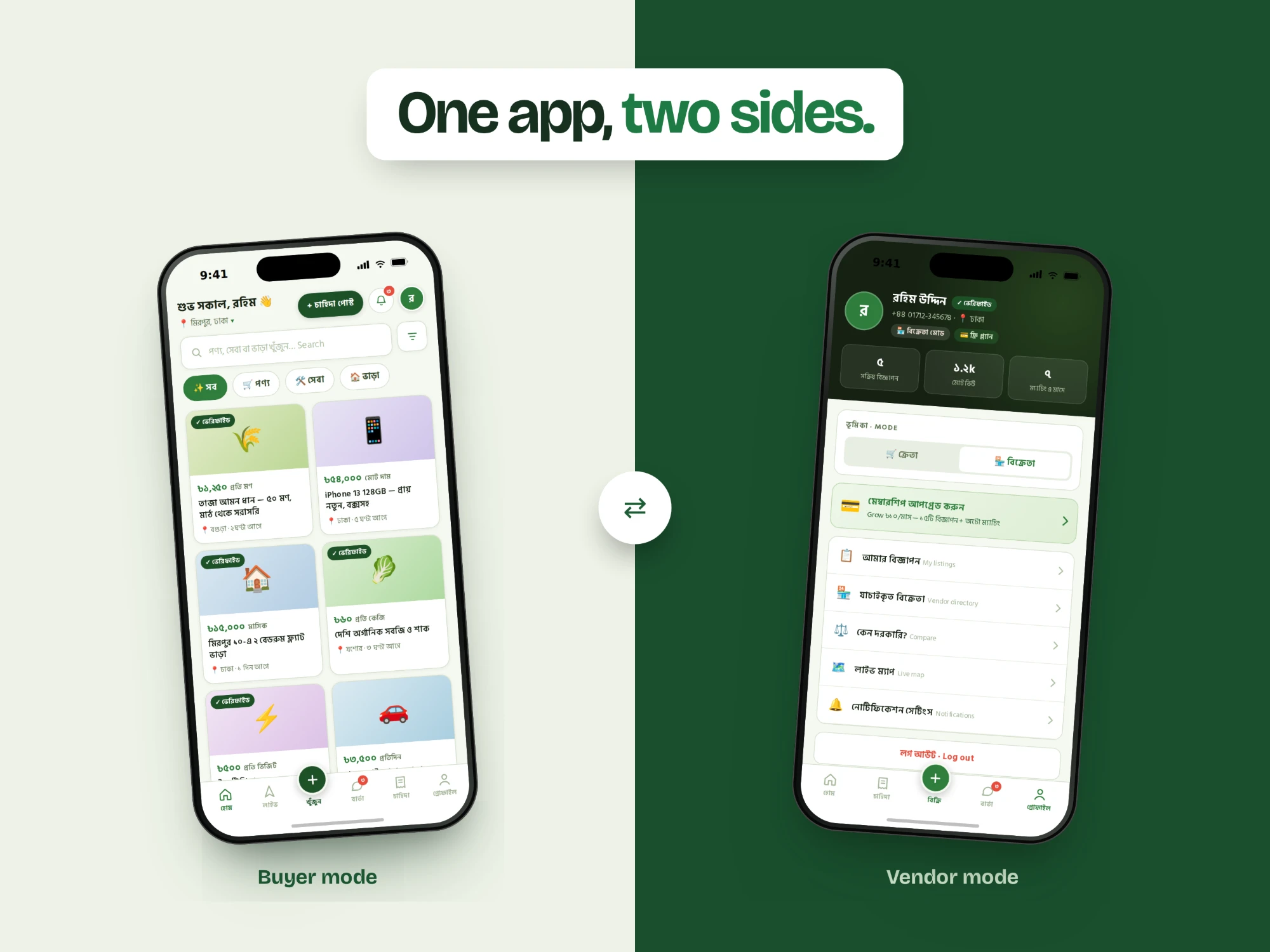
Everyone signs in the same way, and a switch on the profile turns the app from buyer mode into vendor mode. The navigation changes with it: buyers get the home feed, the live map, search, messages and their requests; vendors get the home feed, open requests, a Sell button and messages.
Buyers
Find it or ask for it
Browse, search the live map, post a request with a budget, and deal with the seller directly.
Vendors
List and respond
List products, services or rentals, answer buyers’ requests, and see listings, views and matches at a glance.
Dorkari
Verify and match
The team verifies vendors by hand, and the plans set how far each buyer request reaches.
03 / Design decisions
Designed for trust, speed and Bangla.
Browse first, sign in with a phone number.
Sign-in is a Bangladeshi mobile number and a one-time code, about thirty seconds, and anyone can browse as a guest before creating an account. The home feed puts products, services and rentals behind one row of filters, and every card leads with the price in the unit people actually trade in: per maund of rice, per kilo of vegetables, per month for a flat, per visit for an electrician.
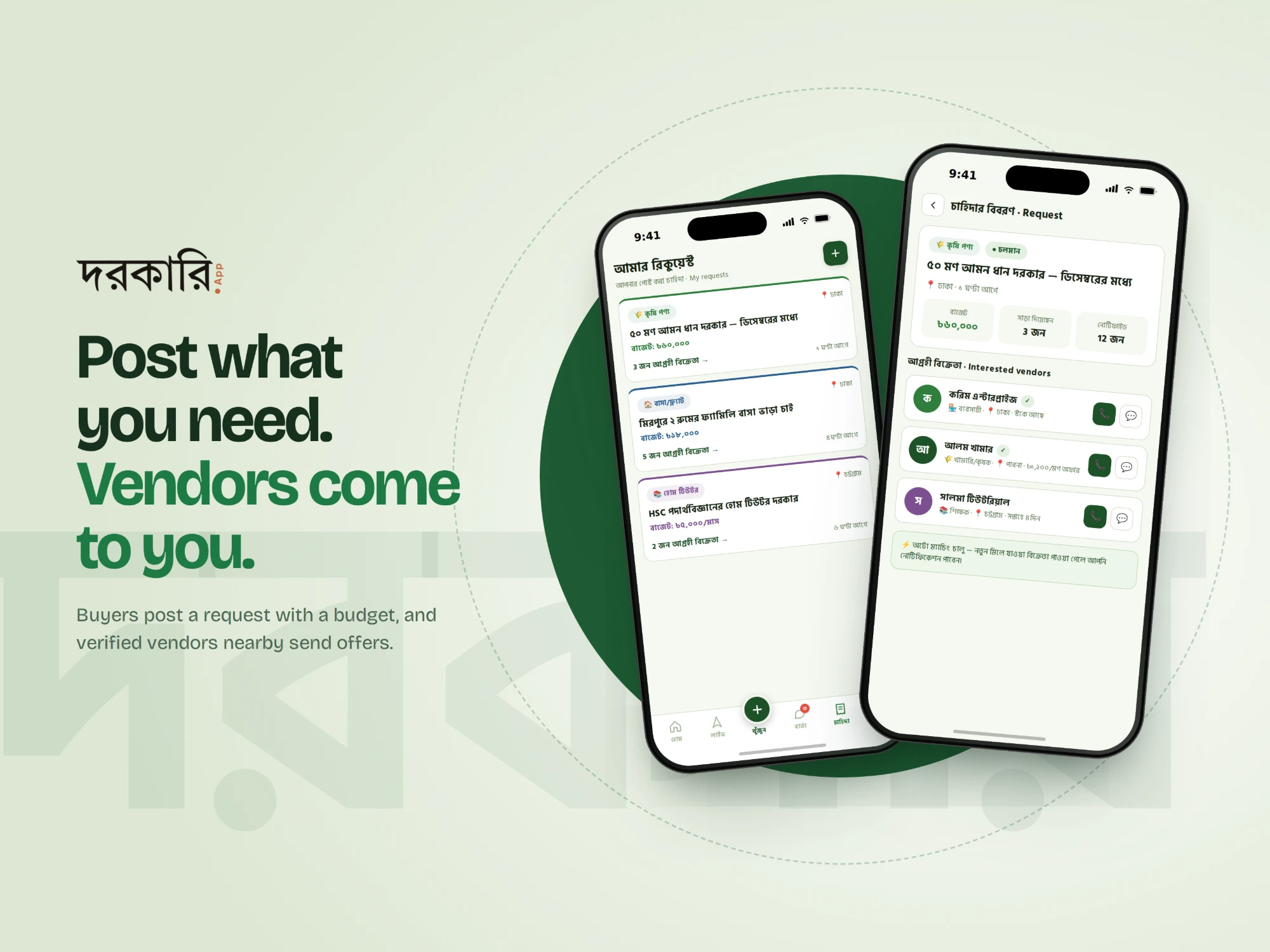
Post what you need, and vendors come to you.
A request asks four things: what is needed, the category, the district and a maximum budget, with room for detail. The moment it is posted, matching vendors are notified automatically. The request page then shows the budget, how many vendors were notified and how many have responded, with a call and a message button beside each one, and matching keeps running as new vendors join.
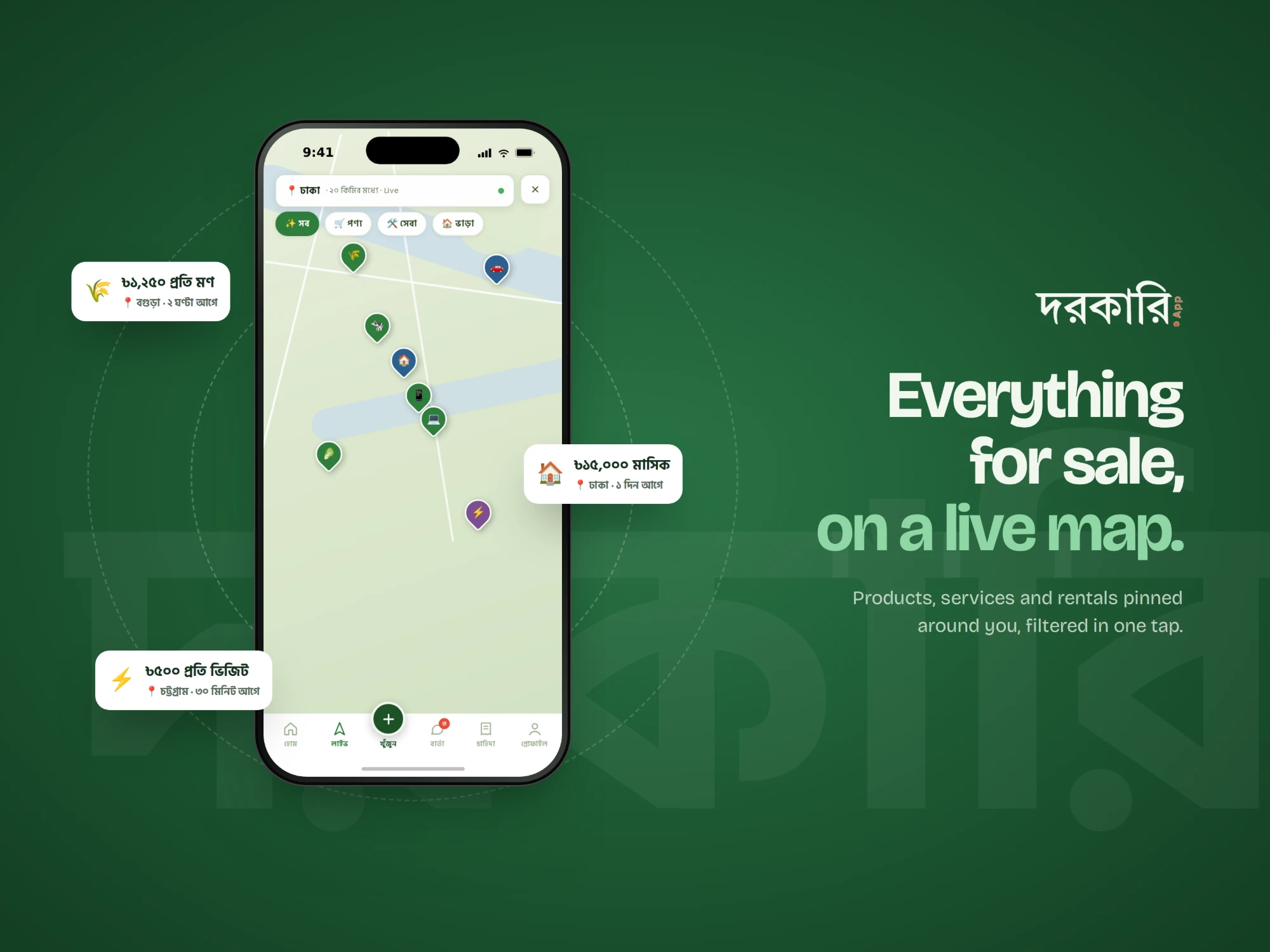
Everything for sale, on a live map.
The live map pins products, services and rentals within a set distance of the buyer, colour-coded by type and filtered with the same one-tap chips as the home feed, so “near me” is something you can see rather than guess.
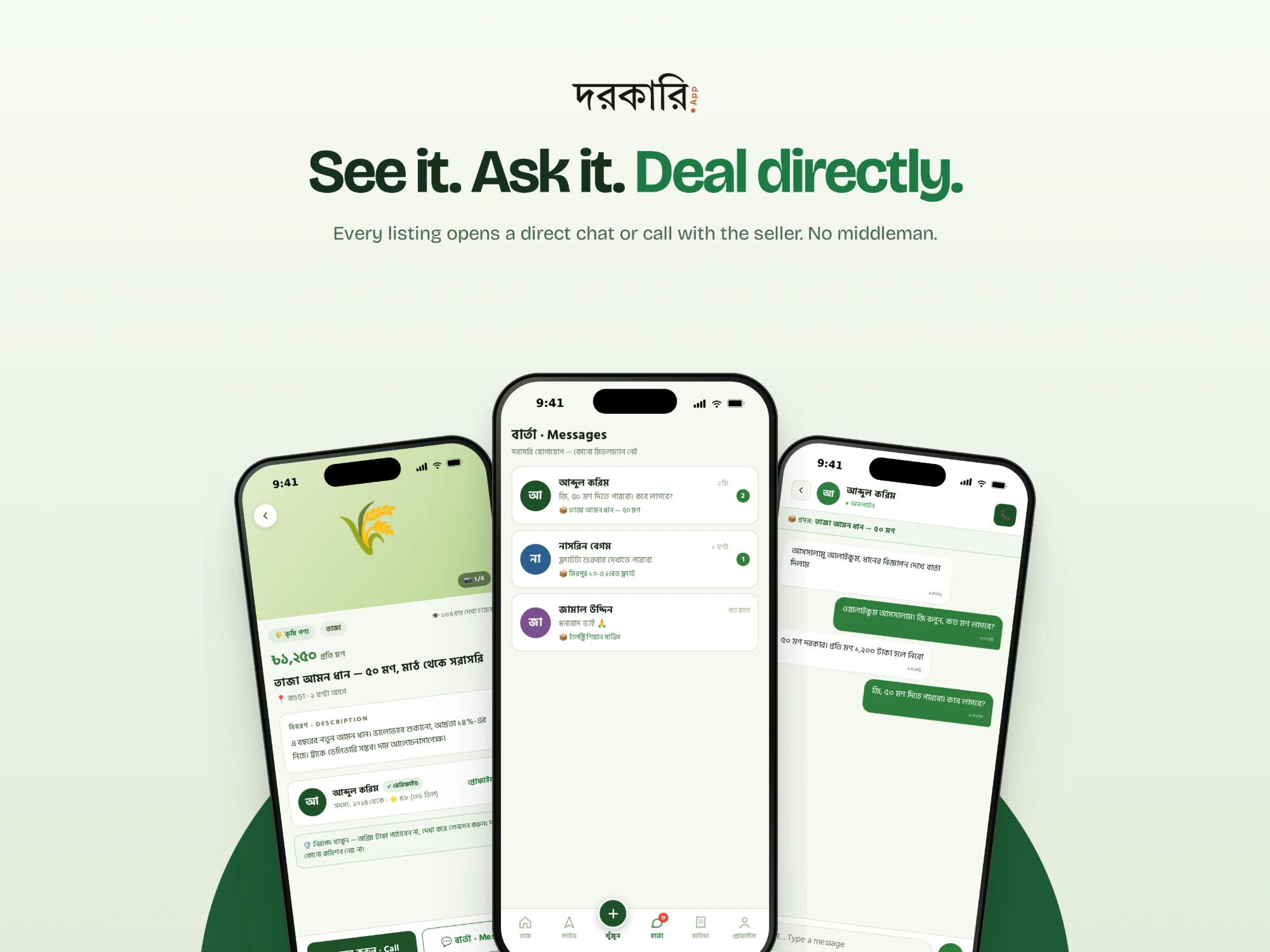
See it, ask it, deal directly.
Every listing opens straight into a call or a chat with the seller, and the listing stays pinned at the top of the conversation so both sides know what is being discussed. Dorkari takes no commission, and each listing carries a plain safety note: do not send money in advance, meet and trade in person.
04 / Trust and plans
Verified by people, priced by reach.
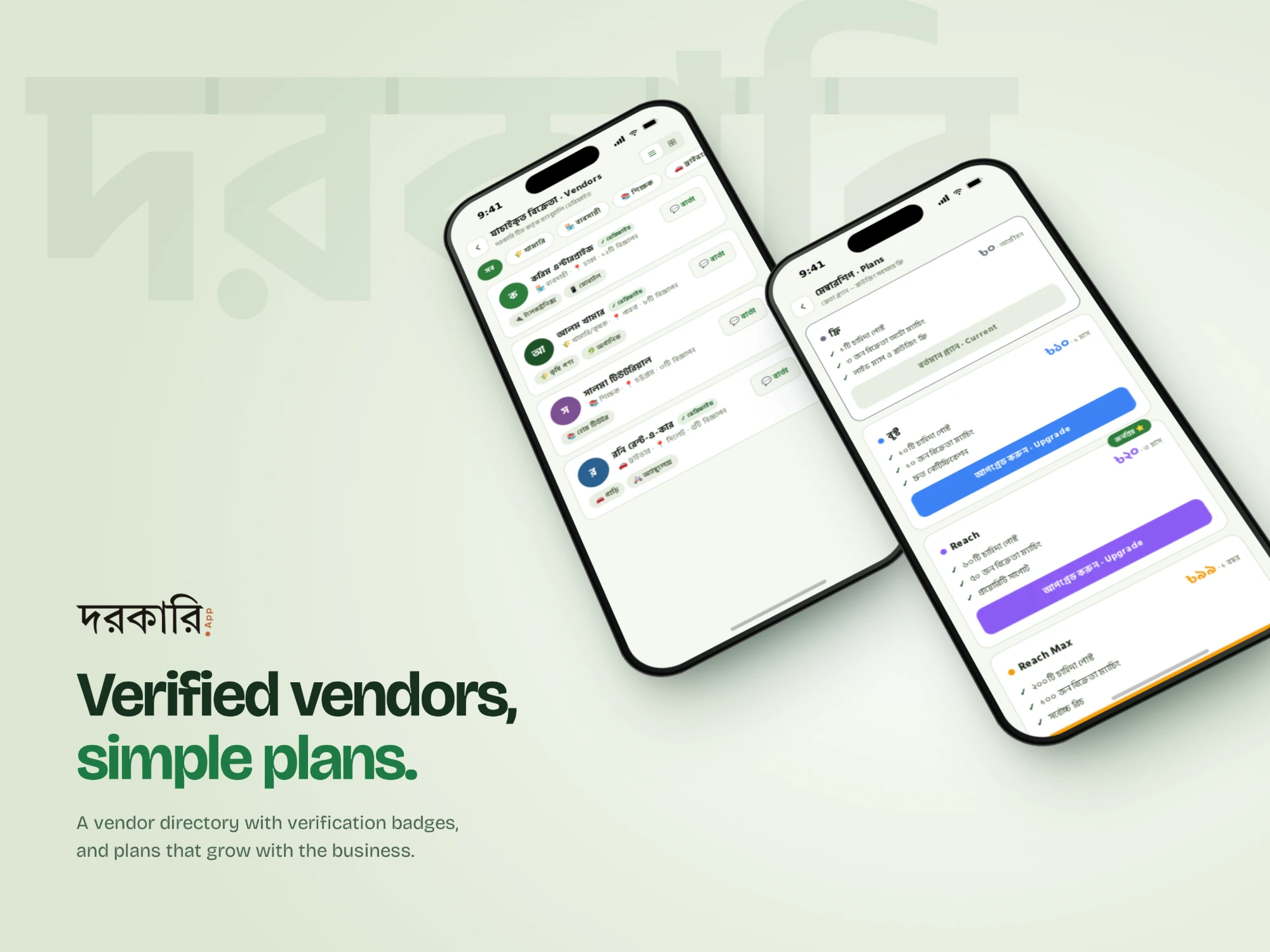
Vendors are verified by hand by the Dorkari team. The directory shows the badge, the kind of vendor (farmer, trader, tutor or driver), their district and how many listings they have.
Browsing and the live map are always free. The paid plans, Boost, Reach and Reach Max, only change how many requests a buyer can post and how many vendors each one is matched with, and a Why Dorkari screen sets the app out feature by feature against other marketplaces.
05 / The outcome
From a marketplace idea to a working product.
- Product strategy. A two-sided marketplace with a request-first model, hand-verified vendors and plans priced by reach.
- UX flows. Sign-in, browsing, the live map, requests and matching, listings, messaging, and switching between buyer and vendor.
- UI design. A Bangla-first, bilingual interface for both modes on one design system.
- Development. React Native for the mobile app, Next.js for the web, and Node.js behind both, with phone sign-in, location, automatic matching and messaging.